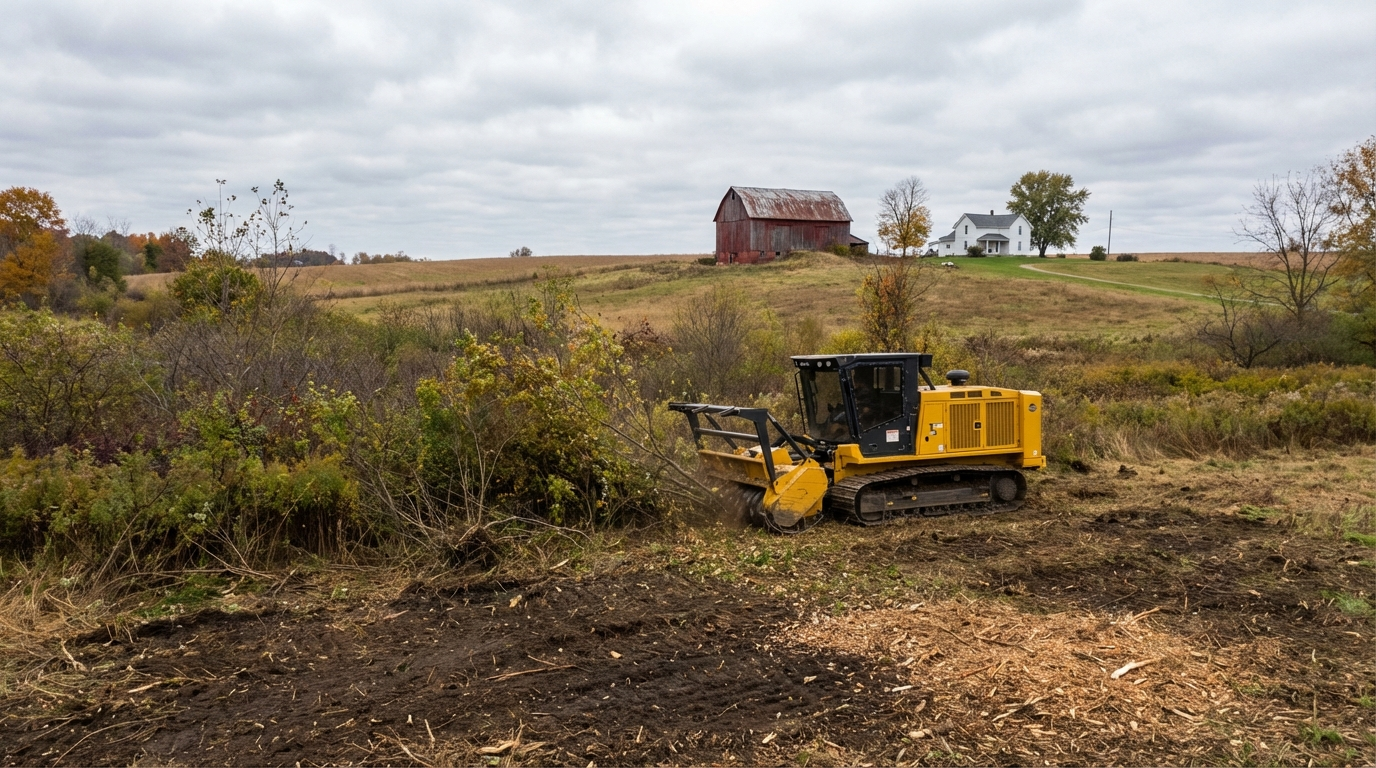
Property owners across the Capital Region often ask: should I brush hog my overgrown land or invest in forestry mulching? The answer depends on your goals, property type, and budget. This guide breaks down both methods with honest cost comparisons and use-case recommendations.
Head-to-Head Comparison
| Feature | Forestry Mulching | Brush Hogging |
|---|---|---|
| Max Tree Diameter | Up to 8 inches | Under 2 inches |
| Root Removal | Grinds root crowns | No root impact |
| Regrowth Prevention | Permanent (single pass) | Requires repeat treatments |
| Ground Mulch Layer | Yes - natural ground cover | No - cut material left standing |
| Erosion Control | Excellent - mulch layer protects soil | Poor - bare soil exposed |
| Tick Habitat Reduction | Significant - removes understory | Minimal - plants regrow quickly |
| Cost Per Acre | $2,500 - $5,000 | $500 - $1,500 |
| Treatments Needed | 1 (one-time) | 3-4 per year |
| Best For | Permanent clearing, site prep, invasive removal | Field maintenance, hay fields, open meadows |
When to Choose Forestry Mulching
- You want permanent clearing without regrowth
- Property has trees, saplings, or woody brush
- Preparing land for construction or landscaping
- Removing invasive species (barberry, multiflora rose)
- Tick and pest control is a priority
- You want erosion protection from the mulch layer
When Brush Hogging Makes Sense
- Maintaining existing open fields or meadows
- Regular seasonal mowing of hay fields
- Budget is the primary constraint and regrowth is acceptable
- Vegetation is limited to grass and light weeds
The Bottom Line
Brush hogging is mowing. Forestry mulching is clearing. If you need land that stays cleared, supports construction, or eliminates invasive species and tick habitat, forestry mulching is the investment that pays for itself by eliminating the cycle of repeated brush hogging.
Not Sure Which Method You Need?
Empire Land Clearing offers free property assessments. We will tell you honestly which approach makes sense for your specific situation.