Tick Control Clearing Tick Habitat Destruction — Land Clearing for Lyme Disease Preventionmdash; Land Clearing for Lyme Disease Prevention in New York
We don't just clear your view. We make your land safe again.
Who Needs Tick Control Clearing?
If you own wooded property in the Capital Region, you are in tick territory. These are the property owners who benefit most from the Empire Tick-Shield Method.
Parents
Make your backyard safe for children. Eliminate tick habitat within 50 feet of play areas and walking paths.
Dog & Horse Owners
Pets are tick magnets. Clear brush corridors and create tick-free buffer zones around pastures and kennels.
Estate Owners
Restore sight lines and safety across multi-acre properties. Park-like finish that is as safe as it is beautiful.
Farm Managers
Protect livestock and workers. Clear fence lines, field edges, and wooded buffers where ticks concentrate.
What Plants Create Tick Habitat?
These invasive species are the primary drivers of tick proliferation across the Capital Region. Each one creates the perfect microclimate for deer ticks to thrive.
Japanese Barberry
The Tick FactoryCreates dense, humid microhabitats ideal for deer ticks. Studies show barberry-infested areas have 12x more deer ticks than cleared areas. Empire pulverizes barberry into fine mulch, destroying the humidity pocket permanently.
Multiflora Rose
The Property BarrierThorny thickets provide shelter for mice and ticks while blocking property access. Empire's SVL75 high-flow vaporizes rose thickets in a single pass.
Bush Honeysuckle
The Shade-OutCreates dense canopy that blocks sunlight from the forest floor, maintaining the cool, damp conditions ticks need. Selective removal restores natural light and dries the understory.
Oriental Bittersweet
The Tree StranglerClimbs and kills native trees while creating dense ground cover. Empire mulches root systems and frees high-value hardwoods from this invasive vine.
Why Forestry Mulching Beats Brush Hogging for Tick Control
Traditional Brush Hogging
- Cuts vegetation at surface level only
- Root systems remain intact and regrow within weeks
- Leaves stumps and debris on the ground
- Tick habitat returns by next growing season
- Multiple passes required over time
Empire Forestry Mulching
- Pulverizes entire plant below soil line
- Destroys root systems '— prevents regrowth
- Creates fine mulch that dries the forest floor
- Permanent tick habitat elimination
- One pass '— build-ready results
The Empire Tick-Shield Method
A systematic approach to removing tick habitat on your property, using industrial forestry mulching technology.
Satellite Assessment
We analyze your property using satellite imagery to identify invasive species concentrations and tick habitat zones.
Custom Clearing Plan
A species-specific removal strategy targeting barberry, rose, and honeysuckle while preserving valuable hardwoods.
Precision Mulching
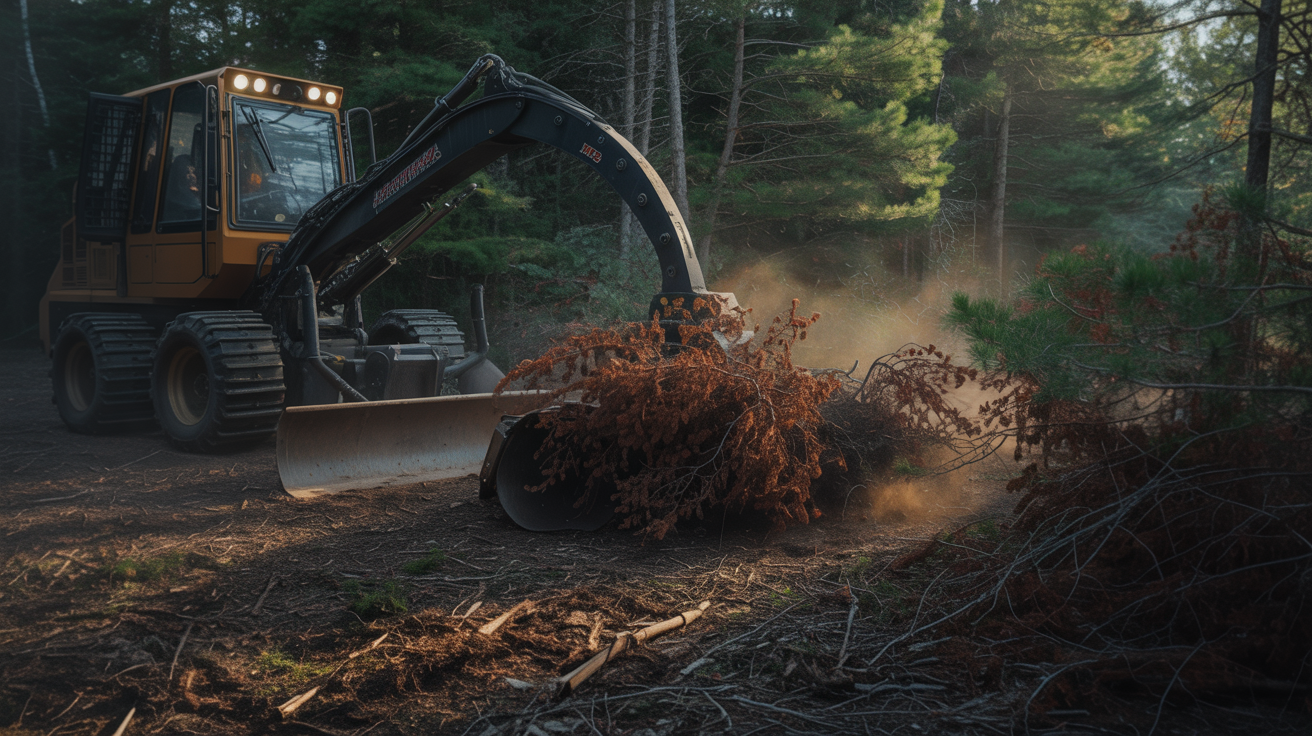
High-flow forestry mulching pulverizes invasive plants into fine mulch, removing the humid microclimate ticks need.
Habitat Verification
Post-clearing inspection ensures complete habitat destruction and a dry, sunlit forest floor inhospitable to ticks.
Service Area
Empire provides tick habitat destruction services across the entire Capital Region of New York.
Tick Control Land Clearing FAQ
How does land clearing reduce tick populations?
What is the Empire Tick-Shield Method?
Which invasive plants create tick habitat?
Is forestry mulching better than brush hogging for tick control?
How quickly will I see reduced tick numbers after clearing?
What areas does Empire serve for tick control clearing?
Make Your Property Safe Again
Request your free satellite property assessment. The Empire Tick-Shield Method starts with understanding your land.