Invasive Species Removal in New York — Reclaim Your Land from the Inside Out
Species-by-species destruction using industrial forestry mulching. One pass. No regrowth. No chemicals.
Invasive Species We Remove
Each invasive species requires a targeted destruction strategy. Empire does not spray. We pulverize.
Japanese Barberry
“The Tick Factory”The most dangerous invasive in the Capital Region. Japanese Barberry creates dense, impenetrable thickets with a humid microclimate that sustains deer tick populations at 12x normal levels. Research from the Connecticut Agricultural Experiment Station confirms the direct link between barberry density and Lyme disease risk.
Empire's Method:
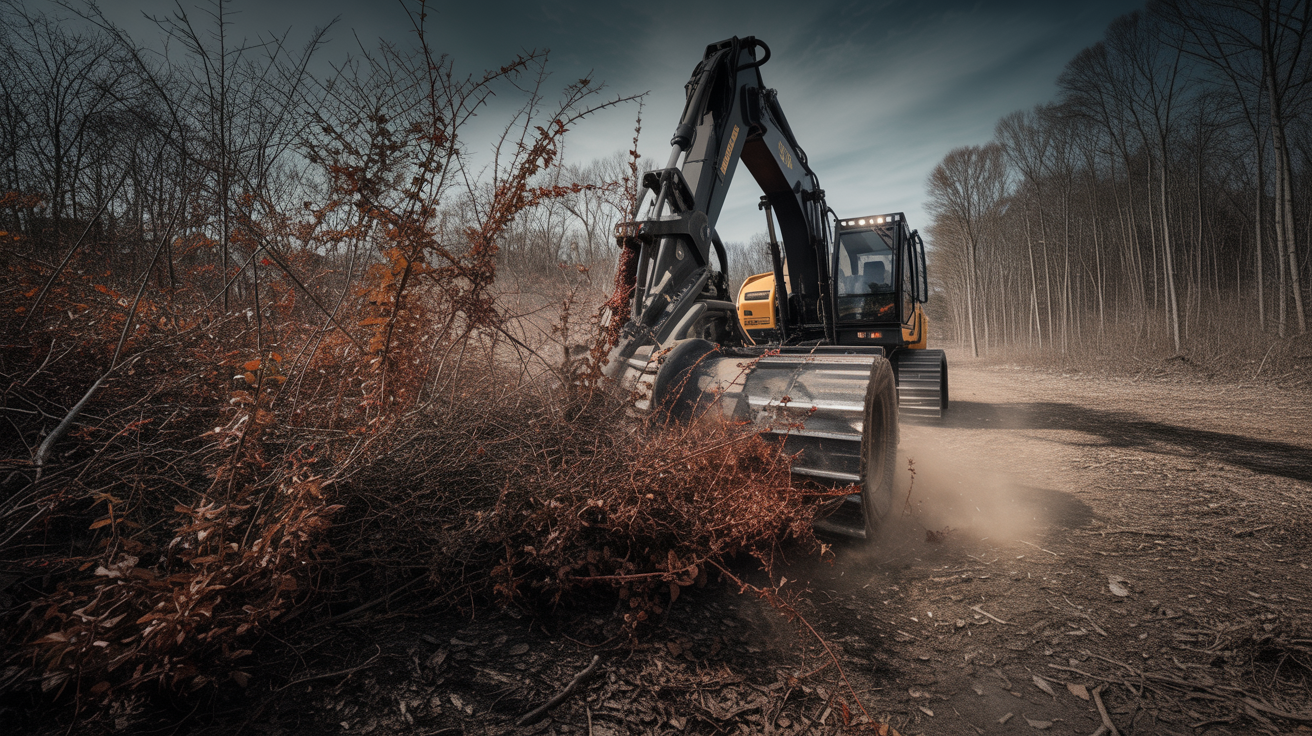
Empire pulverizes barberry into fine mulch using high-flow forestry mulching heads. The resulting dry, sunlit forest floor becomes permanently inhospitable to ticks. One pass. No regrowth.
Multiflora Rose
“The Property Barrier”Thorny, arching canes create impenetrable walls that block access, destroy sight lines, and harbor rodents and ticks. A single plant can produce up to 500,000 seeds per year, spreading aggressively across fence lines and forest edges.
Empire's Method:
The Kubota SVL75 high-flow system vaporizes multiflora rose thickets in seconds. Root crowns are processed below grade, preventing the explosive regrowth that brush hogging causes.
Oriental Bittersweet
“The Tree Strangler”This aggressive vine wraps around and eventually strangles native hardwoods worth thousands of dollars each. It girdles tree trunks, blocks sunlight, and topples mature trees under the weight of its foliage.
Empire's Method:
Empire mulches bittersweet root systems while carefully preserving high-value hardwoods. Selective processing removes the vine without damaging the host trees.
Bush Honeysuckle
“The Shade-Out”Leafs out weeks before native plants, creating a dense canopy that blocks sunlight from the forest floor. Native wildflowers, ferns, and tree seedlings cannot compete. Entire forest understories are replaced by honeysuckle monocultures.
Empire's Method:
Selective thinning and mulching removes honeysuckle while allowing sunlight to reach the forest floor. Native species return naturally within one growing season.
Autumn Olive
“The Pasture Killer”Originally planted for erosion control, autumn olive has escaped cultivation and now dominates open fields, pastures, and forest edges across New York. Its nitrogen-fixing ability changes soil chemistry, making it difficult for native grasses to compete.
Empire's Method:
Empire pushes back the forest line by mulching autumn olive and restoring meadows to a mowable state. Field edges are cleared to prevent re-encroachment.
Why Traditional Brush Hogging Fails Against Invasives
Standard brush hogging cuts invasive plants at the surface and walks away. Within weeks, the root systems send up new growth that is thicker and more aggressive than before. You have not solved the problem. You have made it worse.
Empire's forestry mulching heads process the entire plant below the root crown, pulverizing it into fine organic mulch. This mulch layer suppresses regrowth, retains soil moisture for native species, and creates a clean forest floor that is dry, sunlit, and inhospitable to ticks.
One pass. No regrowth. No chemicals. No hauling. The Empire Standard.
Invasive Species Removal FAQ
What invasive species does Empire Land Clearing remove?
Why is forestry mulching better than herbicides for invasive removal?
How does Empire prevent invasive species from growing back?
What is the connection between Japanese Barberry and Lyme disease?
Does Empire serve areas outside the Capital Region?
Reclaim Your Land from Invasive Species
Empire identifies and removes invasive species using satellite property reviews and professional forestry mulching. Start with a ballpark quote or satellite property review.