
The Hidden Threat in Your Landscaping
Japanese Barberry (Berberis thunbergii) was introduced to the United States in 1875 as an ornamental shrub. By the early 2000s, researchers at the Connecticut Agricultural Experiment Station made a startling discovery: properties with dense barberry had up to 120 times more blacklegged ticks than comparable properties without it.
The mechanism is straightforward but devastating. Barberry creates a humid, protected microclimate at ground level. White-footed mice, the primary reservoir for the Lyme disease bacterium Borrelia burgdorferi, thrive in this environment. More mice means more ticks feeding on infected hosts, which means more infected ticks waiting for their next meal: you, your children, or your pets.
By the Numbers
Why Capital Region NY Is Ground Zero
The Capital Region sits in the epicenter of both the barberry invasion and the Lyme disease epidemic. Albany, Saratoga, and Rensselaer counties consistently rank among the highest in New York State for Lyme disease cases. The region's mix of suburban development, woodland edges, and decades of barberry planting has created perfect conditions for tick population explosions.
Properties in Clifton Park, Saratoga Springs, Niskayuna, and throughout the Capital Region often have barberry plantings from the 1980s and 1990s that have since escaped into adjacent woodlands. What started as a few ornamental shrubs can colonize entire forest understories within a decade.
The Solution: Professional Forestry Mulching
Hand-pulling barberry is ineffective for established colonies. The root system is extensive and any fragment left behind will resprout. Chemical treatment with glyphosate works but raises environmental concerns, especially near water features and in areas used by children and pets.
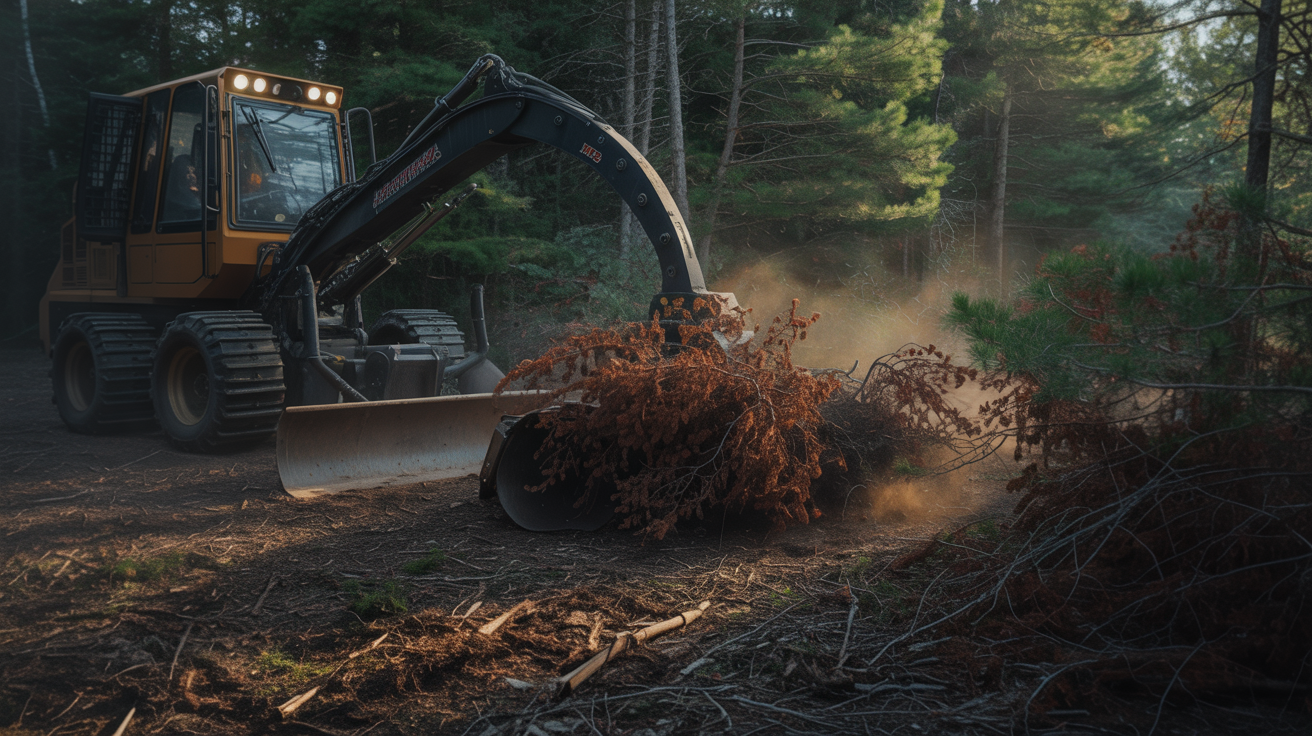
Forestry mulching is the gold standard for barberry removal. Empire Land Clearing uses a Kubota SVL75-2 with a high-flow forestry mulching head that grinds barberry down to ground level and into the root zone. The mulched material is left in place as a natural ground cover, suppressing regrowth while the tick habitat is simultaneously destroyed.
Empire's Tick-Shield Barberry Protocol
- 1Survey & Map: Identify all barberry colonies and tick hotspots on the property
- 2Mulch & Grind: Forestry mulch all barberry including root crowns in a single pass
- 3Monitor: Follow-up inspection to catch any resprouts before they establish
Reclaim Your Property From Ticks
Get a free assessment of your barberry situation and learn how Empire can reduce tick populations on your property by up to 80%.