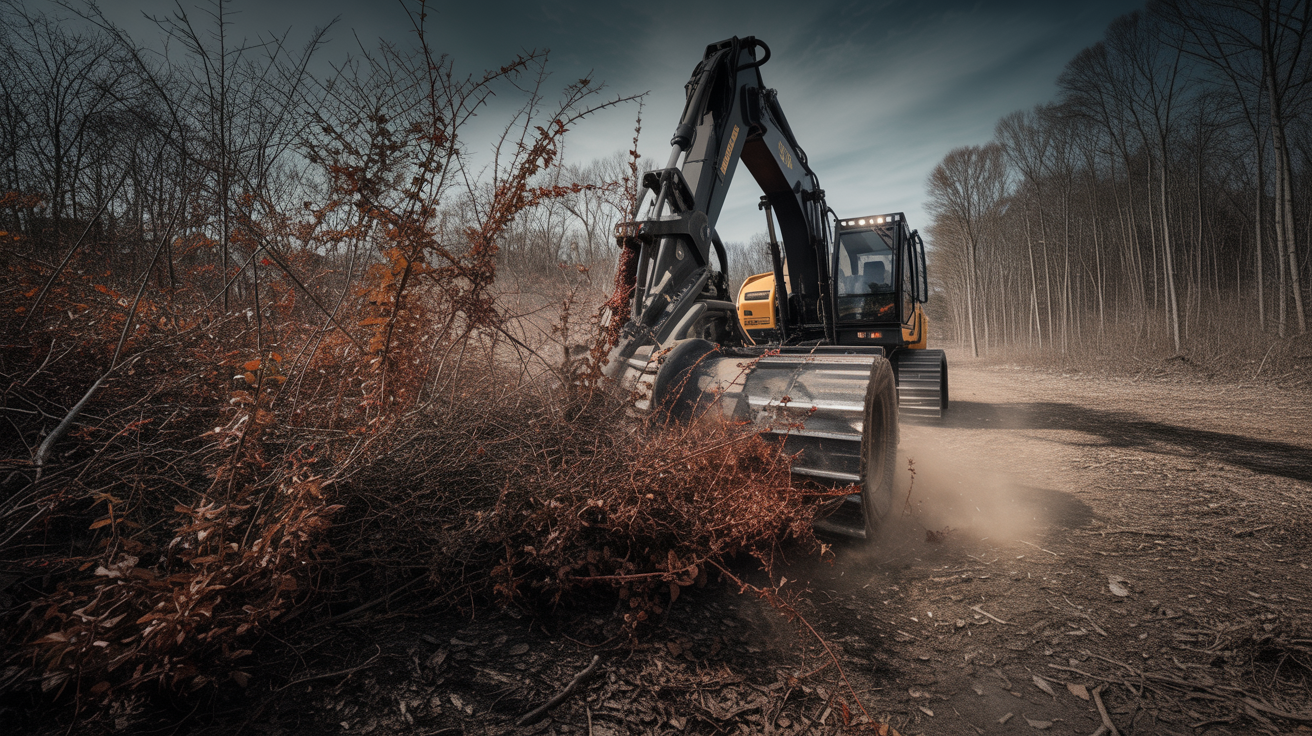
The Capital Region of New York is under siege from invasive plant species that degrade property values, destroy native ecosystems, and create pest habitats. Whether you own 2 acres in Clifton Park or 200 acres in Washington County, these five species are likely on your land right now.
This guide covers identification, impact, and the professional removal methods Empire Land Clearing uses to restore Capital Region properties.
Japanese Barberry
Berberis thunbergii
Dense thorny shrub creating humid microclimate that supports 120x more blacklegged ticks. Found throughout Capital Region woodlands and landscaping. Berries spread by birds into forests.
Empire Removal Method
Forestry mulching grinds the entire plant including root crown, preventing regrowth while eliminating the tick-friendly microclimate.
Multiflora Rose
Rosa multiflora
Aggressive thorny shrub that forms impenetrable thickets. A single plant produces up to 500,000 seeds per year. Colonizes pastures, forest edges, and cleared land throughout Albany, Saratoga, and Rensselaer counties.
Empire Removal Method
Heavy-duty forestry mulching head shreds the thorny canes and root mass in a single pass. The mulched material suppresses regrowth.
Oriental Bittersweet
Celastrus orbiculatus
Aggressive vine that girdles and topples mature trees. Can grow 60 feet into the canopy, adding fatal weight to branches. Extremely common along property boundaries and forest edges in the Capital Region.
Empire Removal Method
Cut-and-mulch approach: vines are cut at the base, then the root zone is mulched to prevent resprouting. Saves the host trees.
Bush Honeysuckle
Lonicera spp.
Leafs out weeks before native plants, stealing sunlight and nutrients. Creates dense shade that prevents native wildflower and tree regeneration. Widespread in Schenectady and Saratoga counties.
Empire Removal Method
Forestry mulching removes the above-ground biomass and disrupts the root system. Follow-up monitoring catches any resprouts.
Autumn Olive
Elaeagnus umbellata
Fixes nitrogen in soil, fundamentally altering soil chemistry to favor more invasives. Produces thousands of berries spread by birds. Thrives on disturbed sites, roadsides, and old fields across the Capital Region.
Empire Removal Method
Mulching followed by targeted monitoring. The nitrogen-fixing ability means disturbed soil must be monitored for secondary invasions.
Free Invasive Species Property Assessment
Empire Land Clearing will survey your property, identify invasive species, and provide a removal plan with pricing.